You’re the founder, the marketer and the support team. Here’s how an agentic data warehouse gives you a data team too, in plain words.
First, what’s a data warehouse?
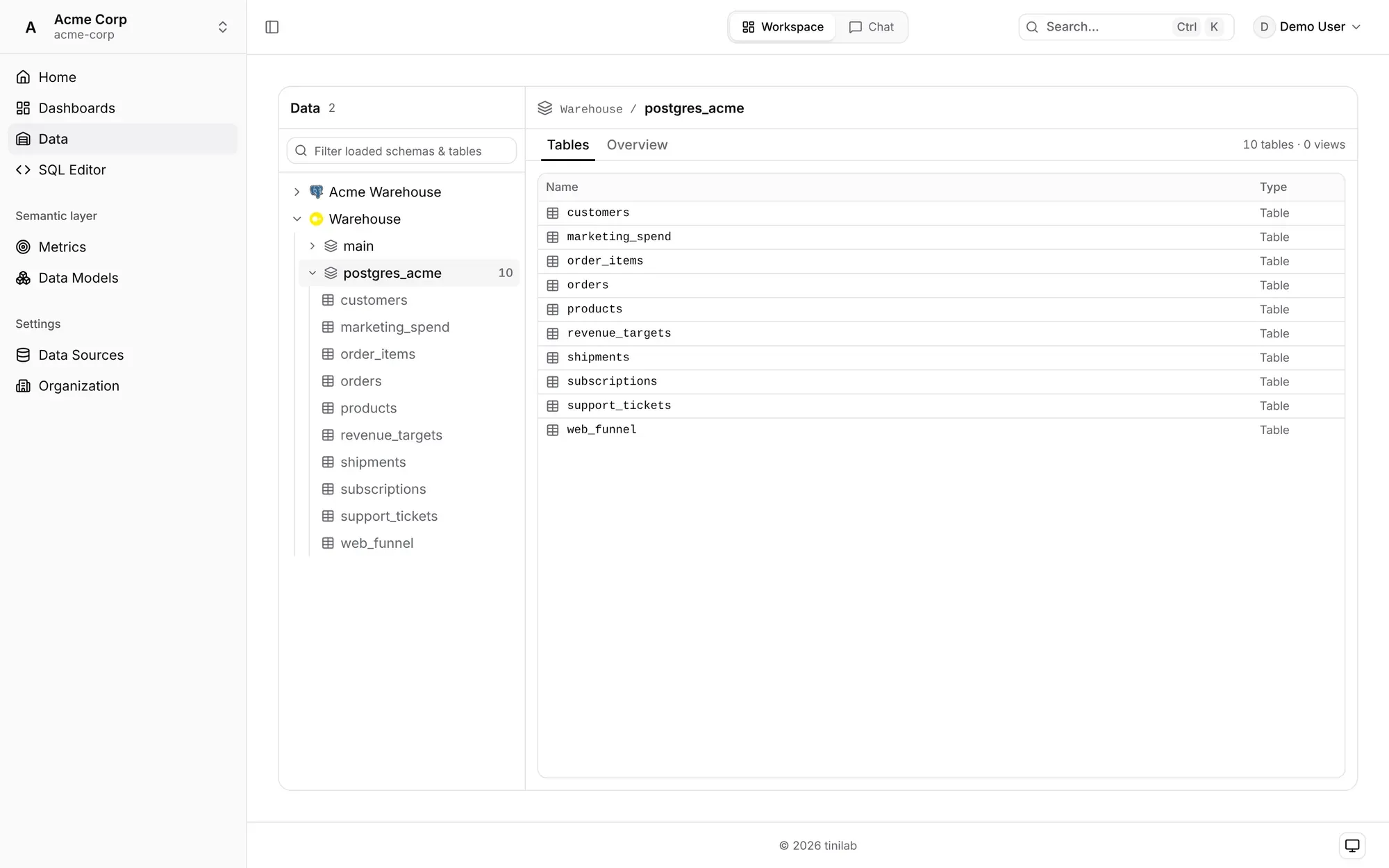
Your business already writes things down everywhere: orders in your app, payments in your payment tool, costs in a spreadsheet, spend in your ad account.
A data warehouse brings all of it into one place, set up for answering questions. Think of it as one always-current spreadsheet of your whole business, where orders sit next to ad spend, next to refunds.
In one line
Your tools run the business. The warehouse is where you see the whole of it.
What makes a data warehouse agentic
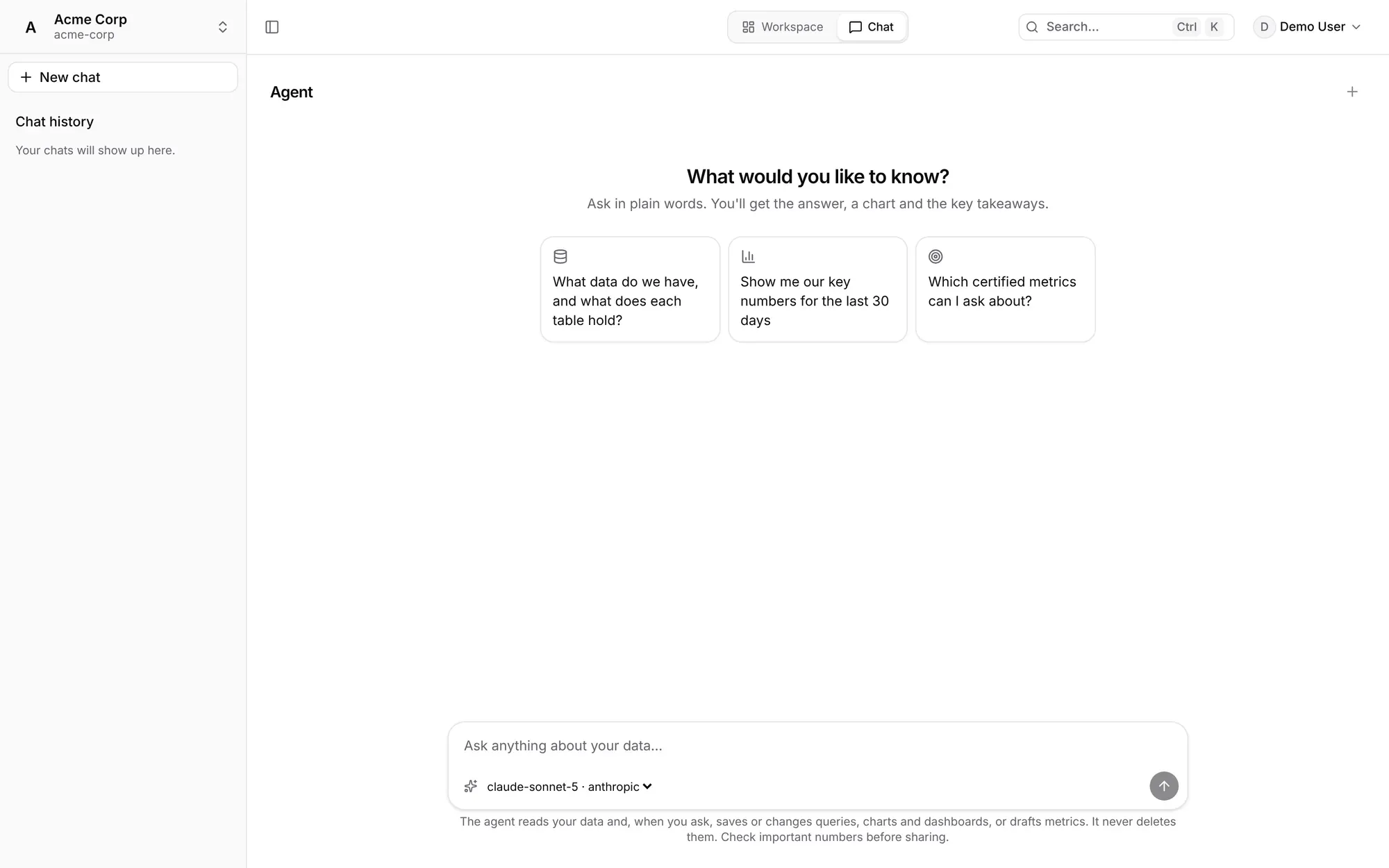
An ordinary warehouse just holds your data. You still have to dig it out. An agentic one has an AI agent living inside it, one that reads your data and does the digging for you. The agent:
- Answers. Ask anything. Get the headline, the numbers and a chart.
- Digs. Asks itself follow-ups to find out why a number moved.
- Builds. Turns good answers into dashboards you keep.
- Defines. Drafts what “revenue” or “active customer” means for you to approve.
| A plain warehouse | An agentic warehouse |
|---|---|
| You have to know what to look for | You ask in plain words |
| Someone has to build every report | The agent builds the charts and dashboards |
| Answers wait until someone has time | Answers whenever you ask |
Why it matters for a company of one
When you run the company alone, you are the bottleneck. Every hour spent wrangling numbers is an hour not spent selling, building or resting. So the numbers get skipped, and decisions go back to gut feel.
An agentic data warehouse flips that. Here’s the same Monday morning, twice.
Monday, without:
- Log in to three tools
- Download reports, paste them into a spreadsheet
- Fix the formulas that broke
- Still not sure the numbers match
A morning gone, and still guessing.
Monday, with:
- Open Orcabase
- Ask: “How did last week go?”
- Read the headline, the numbers and the chart
- Ask “why?” about anything odd
No spreadsheets, and you know.
The point
It’s not about more data. It’s about getting the answer while the question still matters.
What you’ll ask it
The questions you already ask yourself. Now you get answers.
| About | Ask |
|---|---|
| Money | “How much did I make last month, after refunds?” “Which product brings in the most?” |
| Customers | “Who hasn’t ordered in 60 days?” “Do customers from ads stick around?” |
| Growth | “Is this month better than last?” “Which channel brings my best customers?” |
| Warning signs | “Why did sales drop on Tuesday?” “Are refunds going up?” |
How to set one up
- Bring your data together. Connect your app’s data, and upload exports from payments, your store or ads.
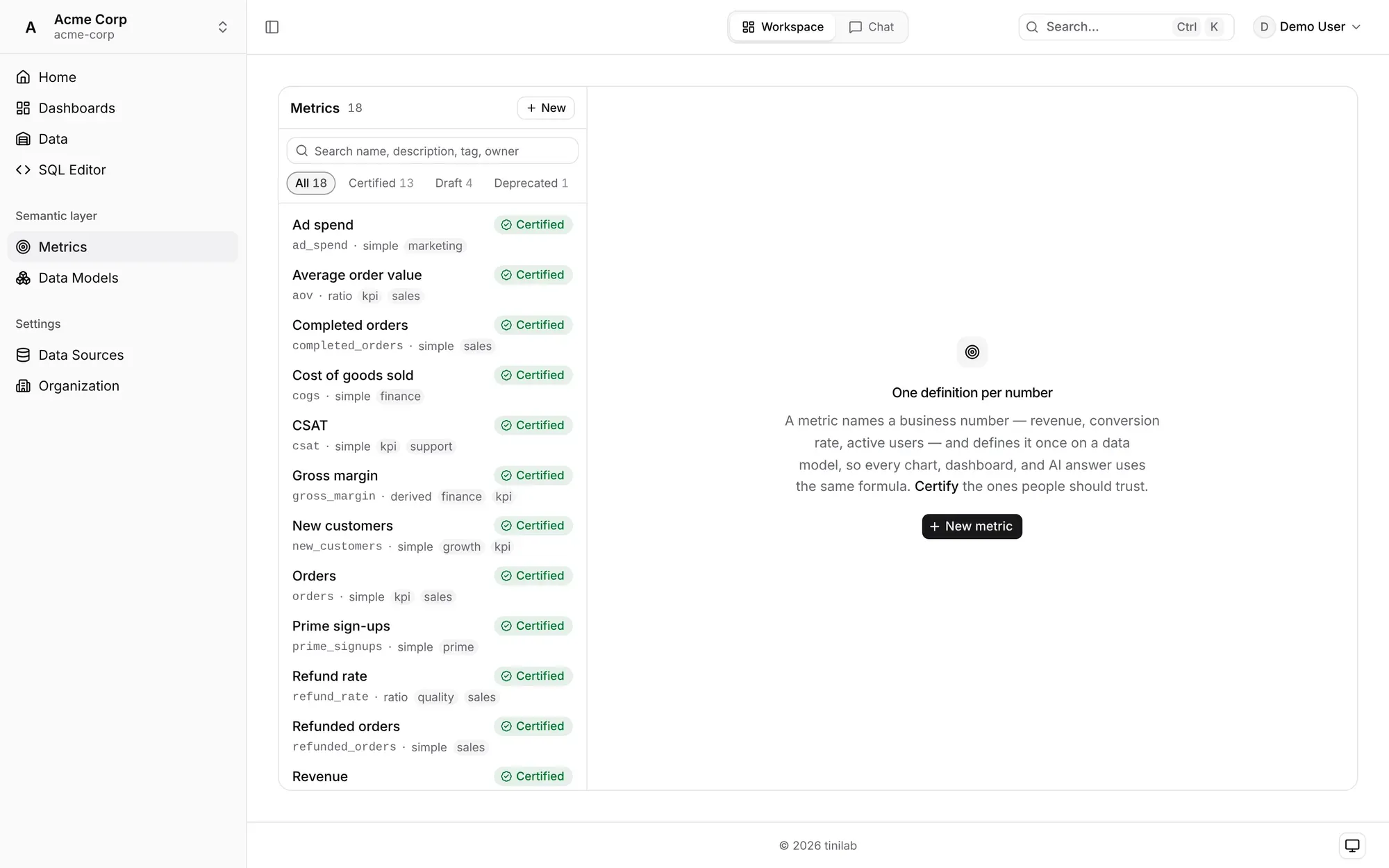
- Name your five numbers. Revenue, new customers, returning customers, plus two that matter to you. Let the agent draft them; you certify.
- Ask your first questions. Start with what’s been nagging you. Follow up with “why?”
- Pin it and make it a habit. Save the best answers to one dashboard. Look at it every Monday.
Not sure which five numbers? The founder’s guide to data has a list for every stage.
What to look for
Whatever you choose, make sure it ticks these boxes. (Orcabase ticks all of them.)
- Answers in plain words. The answer first, not a wall of numbers.
- Shows its work. Every step listed, so you can check it.
- Uses your definitions. Your “revenue”, not its guess.
- Can’t break things. It can’t delete your work, only reads your data, and changes things only when you ask.
- No lock-in. Your data stays yours. Export it anytime.
- You control the AI bill. Your own AI key, paid at cost.
- Priced for one. Not a data-team budget.
See how Orcabase does it: Data Warehouse, Data Agent and pricing.